
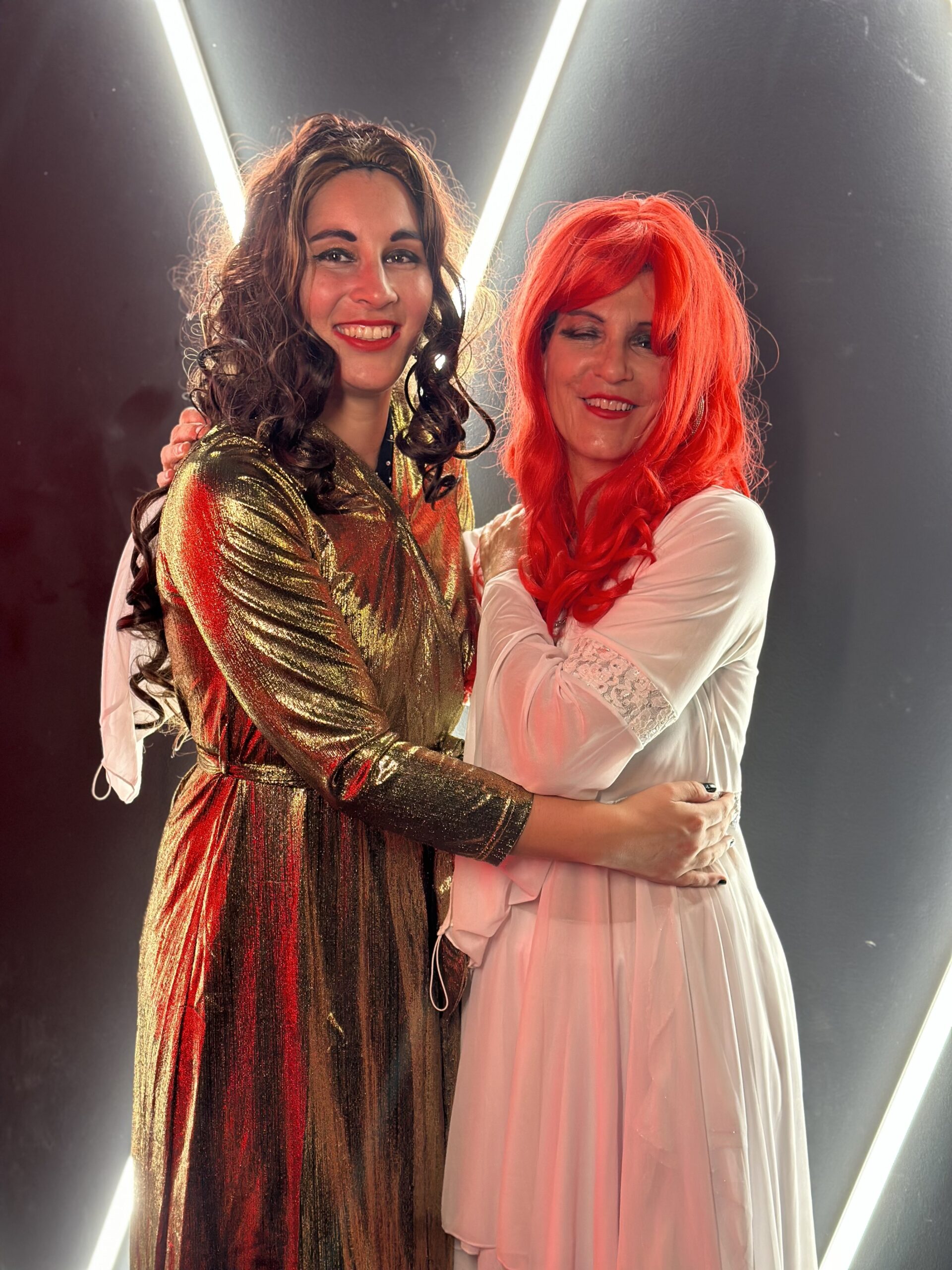
Hey Luana, “Pictures Fade Away” is both a deeply personal song and a short film—how did the concept first come to life?
The song and the short film are a reflection of my narcissistic abusive relationship that I had with my former co-writer Deborah Bishop. During the devaluing phase in March 2023 I was still holding on to the beautiful memories of the charming facade that my narcissistic ex projected onto me.
I spent long hours in the rehearsal studio and journaled a lot to cope with the heartbreak and I tried to understand my abuser’s contrasting personalities.
At one point I sat on the piano and kept playing a C-minor chord. Then I looked in my journal and saw my note “Pictures fade away, memories will stay. Reminding me of the burdens in the past. Not repeating the same mistakes again.”
I said to myself “Yes, that’s the chorus and this is how the song starts.”
Within one hour I wrote the first and second verse. Then I opened Logic Pro and recorded piano, vocals and added a midi guitar and drums.
In September 2024 I recorded the song professionally with my music producer Collin Stanley who also played the guitar and did the arrangement. We kept my piano part from the demo and speeded it up.
The idea for the music video/short film came once we finished the master track. One night I sat down and listened to all the voicemails that my ex left me. Then I started working on the script and edited the voicemails to align them with the lyrics in the song. My goal was to share my whole story by including the three phases of the cycle of abuse which are love-bombing, devaluation and discard. My music producer Collin and I worked on the extended version including the voicemails and a monologue that I wrote and we added sound effects like fire and a heartbeat. We even added the sound of a train which matched with the line “You have been a fucking freight train that has run almost damn near over me”. This is what Deborah said in the voicemail. Once we finished the extended version, I sent it to my director David Clein together with the shot list, script, cast, prop list and details of the location which was a dark room with lights, designed for music video shoots.
Over the phone we discussed how to bring my vision to the screen. I walked David through the shotlist and script and he suggested which lights to use for each scene and whether it is a close up, wide shot or b-roll.
What led you to share your story through your art, rather than keeping it private?
When I broke free from the cycle of abuse I felt helpless and confused. After researching a lot about narcissistic abuse, I came across a narcissistic abuse recovery coach who went through narcissistic abuse with her ex-husband. I booked a consultation and shared my story with her on a private Zoom call. Although she also went through a similar experience, I still felt unseen because I didn’t meet another woman who was abused by an older woman. During the healing process I shared my story with friends and strangers who also had a relationship with a narcissist. I decided to step up and become a mentor to bring awareness that narcissistic abuse can also happen between two women, especially when the other woman is significantly older and is envious of the talent that the younger woman possesses. It was important to me to share publicly how this toxic relationship has impacted my mental health because of the dehumanizing voicemails. This has led to self blame, loss of appetite, a mental breakdown and two hospitalizations.
I wanted to encourage other survivors and victims of domestic violence to stand up for themselves and feel seen and heard, especially in a society where emotional abuse is often overseen. I had the courage to file a police report in October 2024 against my abuser for emotional abuse, physical violence and sexual assault. Although I had evidence as well as proof that my abuser’s ex-husband had a mental breakdown and became suicidal, the district attorney decided that it was not enough evidence to take this case to court.
Was there a specific turning point in your healing journey that empowered you to create this release?
After my second hospitalization, I felt like I was given a second chance and I was finally able to release old lingering feelings and ruminating thoughts about this toxic relationship. I was mentally ready to close this chapter forever and separate myself from old memories and pictures.
When I filed the police report in October 2024 in Nashville and spoke to the officers about the incident, I felt such a relief. I gave them a bag with the gifts that my abuser gave me and asked them to return them back to her. They even called her and all I could hear was the officer repeatedly saying “You are responsible!”
I knew I was on the right track by reporting her instead of enabling her. It encouraged me to release my song Pictures Fade Away together with the short film on June 1st, which is narcissistic awareness day.
What role did music—and this song in particular—play in your healing process?
This song did not just become an anthem of my healing journey, but also a reminder that there is light at the end of the tunnel and that I will rise like a phoenix and leave everything behind that destroyed me. Everytime I sing this song live with my band, I sing and perform it in the most authentic way possible. The memory when I wrote this song and the tremendous pain I was in is still very strong. The audience can relate with it and it became a true showstopper with lots of cheering and people dancing along the funky tunes.
Music has truly helped me to overcome the emotional pain and create beautiful songs.
Was there a specific moment or lyric in the song that was especially difficult to write or perform?
The most difficult lyric to write was “You shattered me to pieces”, because it reminded me of my abuser saying to me sarcastically “Oh, I’m shattering this young woman” which was related to her verbal abuse because she was blaming me for giving her too many Valentine’s gifts. After yelling at me, she had an evil smirk on her face and enjoyed the pain which she caused.
What creative decisions did you make to visually portray the psychological layers of narcissistic abuse?
When I worked on the script, I wanted to make it easy for the viewers to understand how narcissistic abuse looks like. Oftentimes, the abuse is invisible and doesn’t leave bruises. For me personally, I was constantly in a state of confusion, anxiety and vulnerability. Due to the severe gaslighting, it led to headaches and self-blame. To translate this in the music video, I created a scene where I lay in the bathtub and reflect on the moments when the toxic cycle started, while the voicemails are playing in the background. I also created two looks for the character Deborah Bishop aka Robyn Sanderson, to show her charming and evil side. My friend Jasmine Sandler portrayed her and lip synced along the voicemails. Her evil side is wearing a purple witch-looking dress, surrounded by fireballs and red lights and her charming side is wearing a white angel-looking dress, surrounded by white lights. Narcissistic abuse is hard to explain to people who have never experienced it. But I hope that with this video, everyone can understand the abuse cycle and recognize the tactics of gaslighting.
How did it feel seeing your own story play out on screen during the making of the short film?
While we filmed, I looked into my videographer’s monitor to make sure that the acting came across as authentic as possible. It gave me some chills to see my friend playing my narcissistic ex, but I was mentally and emotionally stable enough to give guidance to her and lead the film shoot. I felt so relieved when everything came together and I could finally see my story on the screen. I fulfilled my purpose to bring awareness of narcissistic abuse and help others to understand and recognize it.

What do you hope viewers take away after watching the music video?
My biggest wish is that viewers, especially the ones who have experienced domestic violence and narcissistic abuse, feel seen and heard. I want to encourage them to leave the relationship, open up to friends and family and seek therapy.
If someone watches your short film and listens to your song in silence, what is the one feeling or realization you hope they walk away with?
When I wrote the song in March 2023, I was in a lot of emotional pain and felt like my soul was on fire. It is a pain that I don’t wish on anybody. However, pain is an opportunity to heal from childhood trauma and wounds you are not aware of. I want my listeners to feel heard and understood and that it is okay to be depressed and sit in pain when life is tough in order to step into your highest good.
What does healing look like for you today, and how has it evolved since beginning this project?
Healing to me is like a roller coaster of emotions. Some days are easy and uplifting and other days feel heavy and ruminating thoughts about the toxic relationship are haunting you. In those moments it is tempting to break no contact with your ex, find an excuse to ignore their disrespect and only remember the charming words and gestures. When I started working on the development of the project, I was already emotionally and mentally detached because I did a lot of healing and allowed myself to process and take the time to let go of my old feelings and emotions.

What advice would you give to others who feel silenced or ashamed after similar experiences?
My advice to all victims and survivors of domestic violence and narcissistic abuse is to document everything such as recording phone calls and conversations, saving text messages and voicemails and taking pictures and videos anytime your abuser violates you physically or abuses you verbally and emotionally. While you are in the toxic relationship, save your hospital bills related to the mental breakdown or wounds of physical violence. Then seek out a licensed therapist who specializes in narcissistic abuse and can help you recognize gaslighting, coercive control as well as the side effects of the abuse on your mental health.
In my case I gathered plenty of documents and put them in a binder and filed a police report. In May and July 2025 I received a random phone call and text message from a record label that was interested in signing Deborah, but wanted to know the full story about what happened between us. I shared with them that Deborah filed for bankruptcy in 2006 and insulted me in the most dehumanizing way by calling me a fucking freight train. This led to body shaming, loss of appetite and extreme weight loss which also led to a hospitalization.
They were concerned with her demeanor after they saw negative feedback regarding her and wanted to have a green light if they are signing a normal artist and not a suitcase of problems. They asked me to call her manager and share my story with him. I called him and told him how her behaviour has impacted my mental health and that she has abused other women and men half her age. Even her ex-husband became suicidal and had an emotional breakdown.
When I had my phone interview with the detective who was reviewing the police report, she said that Deborah was very upset that I tried to ruin her reputation in the music business. There was no word of sorrow or acknowledgement of her wrongdoings towards me and concern that she almost destroyed me mentally and psychologically. Instead, she played the victim and was angry with me for exposing her abusive behavior.
In conclusion I can say that speaking up is so powerful. You are not only learning to stay in your truth, but also you are not enabling the abuse and you are sending a warning to other people who encounter your abuser.
In what ways do you hope this release contributes to raising awareness about narcissistic abuse?
With this release I’m sending a warning that not only narcissistic men abuse women, but also older narcissistic women abuse younger women. Between women it is much harder to recognize, because you could never imagine a woman hitting another woman versus a man hitting a woman. Oftentimes, the abuse of an older woman is more covert and hidden behind charm. Deborah was very good at punishing me for doing something special for her such as giving her a gift. She flipped the script and I ended up apologizing for causing the outburst. But in reality Deborah did this because she felt small and didn’t put any effort in the relationship and she always wanted to be in full control over me. That’s why she had to knock me down all the time. Anytime I was close to crying because of her abuse, she showed affection and became this charming chameleon. It was an addiction which led to cognitive dissonance. I couldn’t tell which version of her was real. In the music video it is very clear how Deborah changes her voice when she is charming versus when she is abusive. Unfortunately, in these relationships we only get to know the true colors of the narcissist when they discard us.
I hope with my music video, the viewers are able to see the red flags of the narcissist before they become emotionally attached. Once you are in their web of delusion, it is much harder to get out.
My music video is nominated for a Wavy Music Award and I am excited to sing Pictures Fade Away at the award show on September 20th in New York City.

