
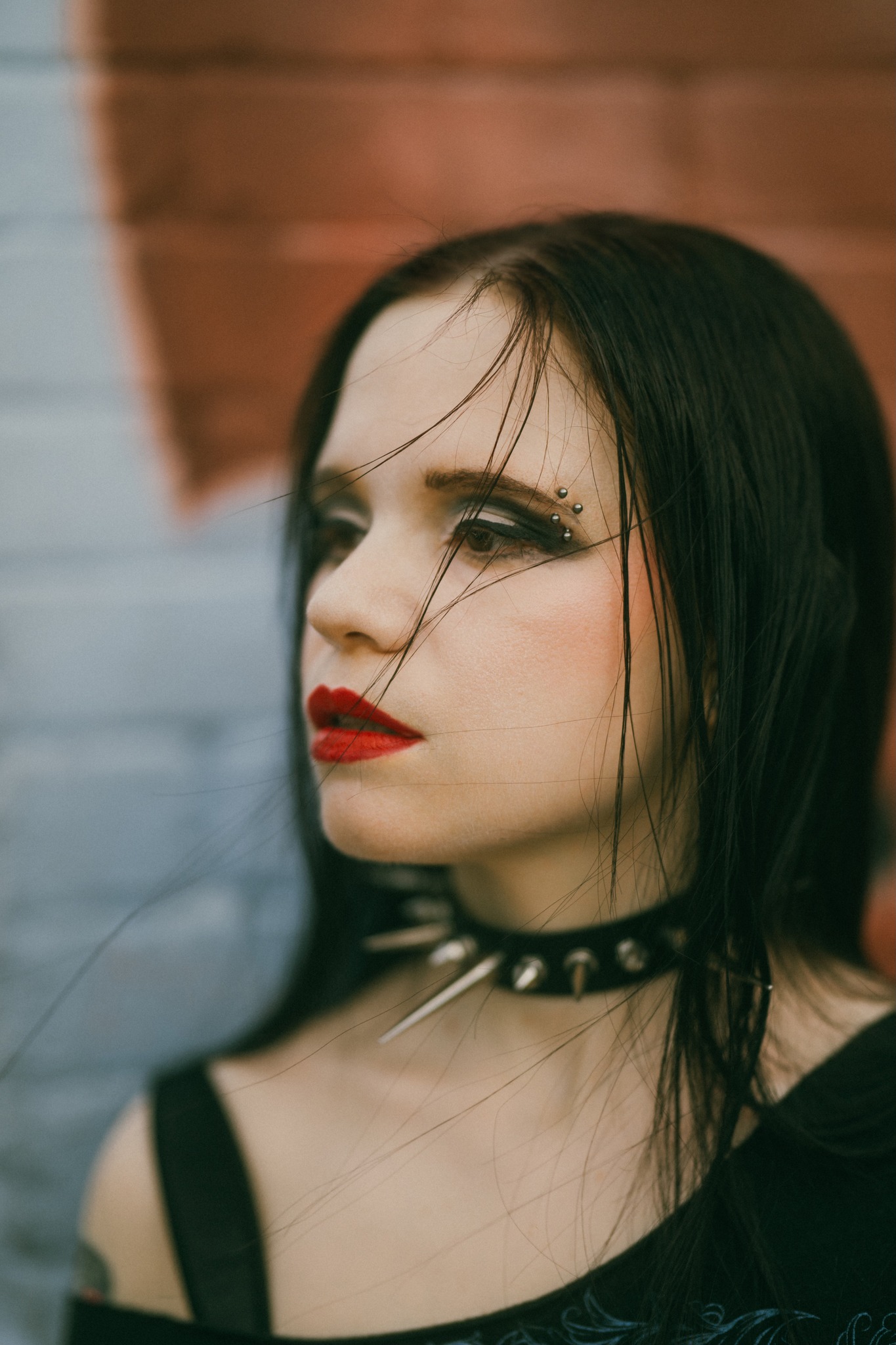
1) “The Instrumental Sessions” strips away vocals and lets the music speak—what inspired you to create a record where instruments take the lead?
As a vocalist first and foremost, crafting an instrumental album was never something I’d consciously set out to do; it just happened. After my old band fell apart, I felt a push to dig more into learning how to produce my own music, so I wouldn’t have to depend on other musicians—or argue with producers about technical details of the instrumentation and recording process. I’d already been dabbling in audio production, with GarageBand: I started with some basic drum patterns, and then added strings, manually inputting every note with MIDI. It was tedious, but rewarding. After a few years of this, when I realized I was ready to go all in, I bought Logic Pro X and began teaching myself how to seriously elevate my production skills. And all of a sudden, it sounded like I had a full band and an orchestra behind me. I remember muting the vocal tracks while working on my instrumental arrangements one day, and it hit me that my music was complex enough to stand alone without vocals. After mulling it over for a while, I realized that I wanted to showcase that. That’s where I got the idea to release an instrumental album.
You’ve said instruments can speak as powerfully as words—was there a particular track on this album where you felt that most strongly?
No song holds my heart like “Sweet Strawberry.” I wrote that song as a teenager, while healing from an older boy’s manipulations—and years later, I still feel that it is my best work. But “Look Up” and “No Tug o’ War” are also up there. “Look Up” is a story about healing and finding closure in, well…a lack of closure. It’s about recognizing that we can only do so much to help another person, if they are unwilling to help themselves. “No Tug o’ War” is of a similar vibe, but written several years earlier when I was in the thick of it, grappling with the most excruciating heartbreak of my life. In the lyrics, I compare relationships—both romantic and platonic—to a tug o’ war, because they’re supposed to be a give and take. But there is no tug o’ war when one person is doing all the giving, and the other just takes. Hence the song title.
Which song from “The Instrumental Sessions” challenged you the most to arrange, and why?
“Magnetism” was the hardest by far, because it took me months to figure out what to do with the drums. I felt that they were boring and repetitive. The song starts off with a very slow and steady groove; it’s meant to evoke restlessness and frustration as it builds toward the climax in the bridge, which features a dramatic switch from 4/4 to cut time. (That’s one of my signature moves in songwriting. No pun intended.) I kept feeling like something was missing from the percussion section, especially in the verses. It was gnawing at me for ages. I had to watch so many YouTube videos of heavy metal drummers, and sound engineering tutorials geared toward percussion, before I finally figured out how to fill in the gaps in that song. Once I did that, it felt like something had physically lifted off of me. It was an enormous relief. And I love the finished product.
When layering multiple guitars, strings, and MIDI effects, how do you decide when a track feels complete and each element has its place?
I feel that a song is complete when it can easily stand alone and evoke strong emotions without the vocals. I always mute the vocals while writing the MIDI parts, because it allows me to focus more intently on all the fine details of each track.
How did experimenting with MIDI and orchestral simulations influence your creativity, and what challenges did you face in mastering them for this project?
MIDI has opened up so many doors for me, and granted me a level of creative freedom I’d never previously thought possible. With this technology, I can markedly increase the complexity of my instrumentation. It is so thrilling to be able to transcribe everything I hear in my head directly onto my computer screen—whether it’s an instrument I don’t play, or a cool effect that just adds some extra verve to the mix. (Fun fact: it took me twenty minutes to find and combine all the special effects in the three seconds of “Look Up” right before the chorus hits. I regret nothing.) I’m a guitarist and a pianist, and I love the parts I write on those instruments; but I’ve always craved a bigger, more cinematic sound in the music I write. MIDI allows me to create that.
The biggest challenge has been writing the percussion sections of my songs, because I know very little about drums. I only really know what I hear. So I’ve had to work extra hard to learn to craft drum parts that sound realistic. It’s taken me years to get to the point of being truly proud of them.
You recorded this project at home—how did that DIY environment shape the final sound, and do you see yourself continuing to self-produce or working with an outside producer in the future?
There’s a saying in the home-recording community: remove the room. That means recording through DIs as much as possible, to eliminate interference. Recording directly into my “studio in a box” all but eliminates the possibility of technical issues like harsh feedback and echoes from poorly-placed microphones, which can happen in a traditional studio. I just need my guitars, my MBox, and a few cables, and I’m good to go. Tracking guitars and vocals is pretty barebones; the magic happens after I record, when I add all the right plugins and MIDI effects in Logic to simulate a full band and orchestra.
I absolutely will continue to self-produce going forward. That level of control over every detail of the production and arranging process is a necessity for me; it feels like an extension of my autonomy as a person. Not only does it give me full creative freedom, but it also spares me the stress of having to work out splits with other musicians and producers. Doing everything myself keeps the business side of things easier as much as the creative aspects of my career.
You’ve been singing since before you could talk—do you remember the first moment you realized music would be your lifelong path?
My mom has been a piano teacher since I was three. She played and sang showtunes with me as I grew up. When I was four, she told me that someone who plays music is called a musician, and that lit up something inside me. That was the moment I knew what I wanted to do with my life. My mom began teaching me to play piano shortly thereafter, and I never looked back.
Having played in bands before going solo, what lessons from those experiences shaped the way you approach music now?
From playing in bands, I learned that there are pros and cons to collaboration as well as working alone. As a hardcore introvert, I’ve found that I work best alone. Of course it was fun to jam with other musicians and see them take pleasure in playing songs I’d written; but nothing compares to having an idea for a song form in my mind, and then crafting the entire piece on my own. Also, I don’t have to worry about coordinating schedules with other people to plan rehearsals—or navigate the minutiae of small talk and the inevitable disagreements that crop up in group settings. It’s just me at home with my instruments. I think my bands were meant to not work out, to push me to realize my initial goal of being a solo artist.
Your upcoming EP, “The Rain on Your Parade,” is set for fall 2025. How does it build upon or diverge from what you explored here?
Three of the songs on “The Instrumental Sessions” will be on TROYP, including the first single, “Sweet Strawberry.” Another track is “Life Doesn’t Work That Way”—a snippet of which I’ve pinned on my Instagram grid, as a teaser. I think if people have listened to “The Instrumental Sessions” enough times, they’ll appreciate TROYP on a deeper level because they will have already become so intimately acquainted with the instrumentation. The vocals will feel more meaningful.
Looking ahead, do you see yourself continuing to release instrumental-only projects, and how do you envision the overall evolution of your music—both instrumentally and vocally—over the next five years?
As a singer and guitarist first and foremost, any future instrumental projects will be on the back burner. I might release an album called “The Instrumental Sessions, Part 2” in the future, but it’s not a priority. I always write lyrics and vocal melodies first, anyway. I have my next eight albums planned out—all full-length LPs after TROYP—so that’ll keep me going for the next several years. Once TROYP is mixed and mastered, I’m going to dive right into finishing the recording and production on my next album. More than half of that album is already done, since so many of the songs are on “The Instrumental Sessions,” so I’m super excited to re-release all those songs with the vocals. Other than that, I’m just going to keep writing songs whenever I feel inspired, recording them in my home studio, and learning even more about audio production. The technology is always evolving, and it’s fun to get my hands on all the new plugins and pedals and shit like that, which can help me take my music to higher levels.

