
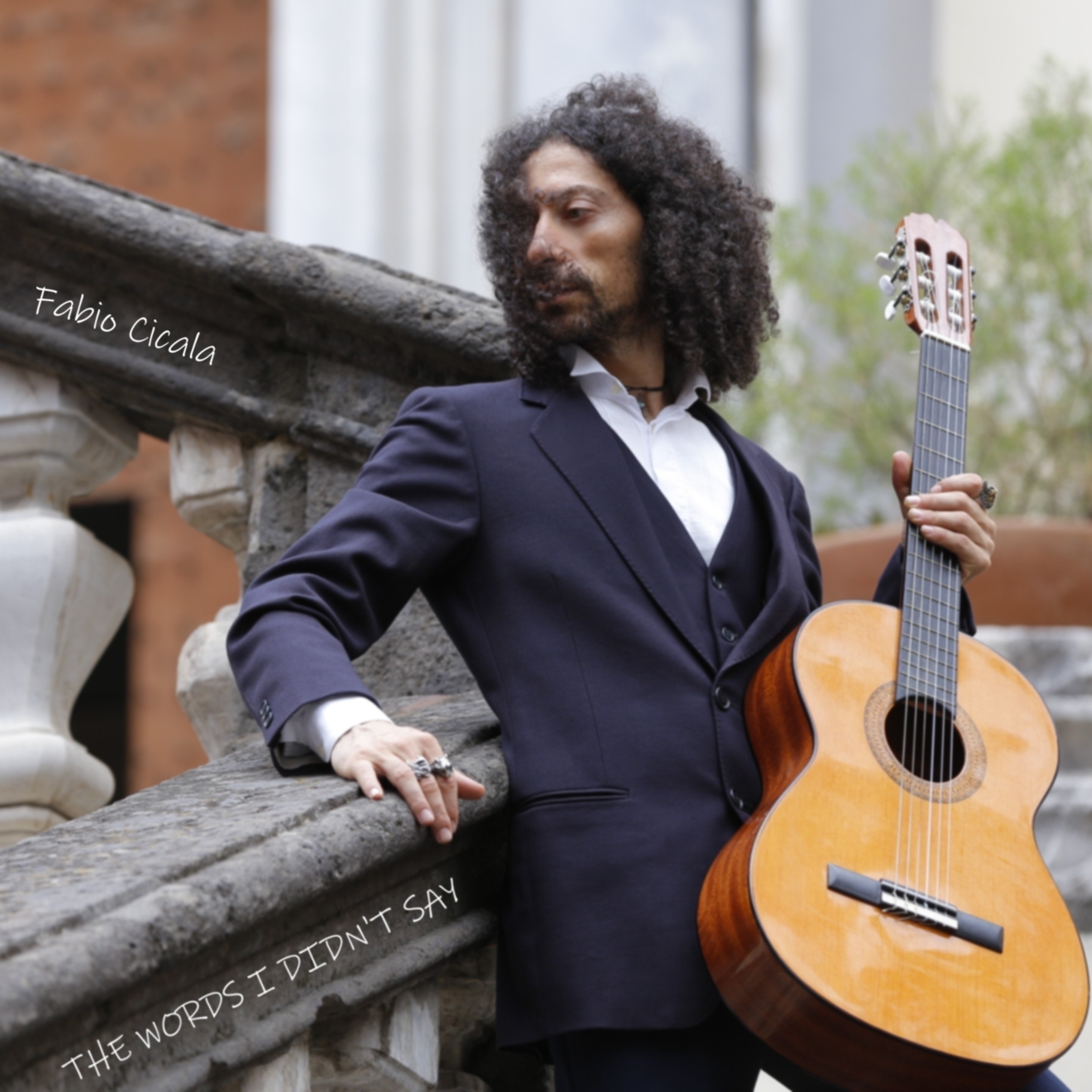
Your musical style effortlessly blends elements of baroque, neoclassical, and progressive rock. How did growing up in the Campania region of Italy influence this eclectic fusion of genres?
The main dialect of the Campania region is Neapolitan, which is actually a language with its own grammar and words, its own literature, cinema, etc., different from the Italian language, like it happens in many regions of my country of origin. Campania also hosts a variety of vernaculars originated from Neapolitan, which means I grew up listening to different sounds when people were speaking around me. Sometimes there were different sounds to express the same meaning, sometimes to talk about different topics; I think this contributed to keeping my mind open to many genre possibilities, both when listening to music and when composing it.
Moving from Italy to London is a significant shift. How has the dynamic London music scene influenced your artistic evolution since you relocated in 2014?
I’ve always liked to explore different cultures and to embrace challenges. Furthermore, when I was a child, if you wanted to be an artist of any kind, open to different music genres and musical traditions, and you wanted to make a decent living out of it, the best suggestion given to you was to move to either the UK, or the US… I’m originally from Caianello, a small town in Campania, a southern Italian region, then I moved to Naples, the biggest city of the region, to study at the Academy of Fine Arts.
There are some similarities between Naples and London, in the urban plan, the rich cultural offering, and the open-mindedness towards various cultures. It goes without saying that London is a megapolis, it’s ten times bigger than Naples! The main challenge for me has been to adapt to the different climate and temperature, which can change dramatically even within a few hours. I appreciate how The City builds your self-confidence; whatever your goal is, it gives you the key to dig deep inside your dreams and to find your voice in the community, as long as you work hard.You’ve mentioned that your guitar is tuned to 432 Hz for its healing properties.
Could you elaborate on how this specific tuning affects the emotional resonance of your music?
The 432 Hz tuning is an old way of tuning an instrument, is tuning an instrument with A 432 Hz, and then the other notes in relation to that, and it existed long before the official tuning with A 440 Hz came out after WWII in most of the western countries. The ancient tuning gave life to vibrations closer to mankind sensitivity, which made our bodies feel relaxed and nourished, contrary to the modern tuning, which started to become more and more popular between the end of the 19th century and the beginning of the 20th century. The 440 Hz, in fact, is more famous for making the listeners more productive in their daily jobs and less empathetic.
Balancing minimalism with virtuosity is a defining feature of your compositions. How do you approach finding the right equilibrium between these two elements in your work?
I’ve always liked listening to well-structured music, from baroque to neoclassical, heavy metal, jazz, fusion… but I also like to spend plenty of time rehearsing the same music phrases over and over again. In order to achieve a clean execution, I also play them very slowly, and that’s when an intricate solo or composition is dissected into very little parts. This has probably helped me to conceive some juicy ideas to be concentrated in a few combinations of sounds. Furthermore, being that I’m mostly a self-taught musician, I think this helps me keep an unprejudiced attitude towards music composition. I usually have a visual imagination since my background in visual arts, which I then translate into sound expression. From there, I try to see if I’m moving in the right direction!
Every artist experiences a moment when they realize that music is more than just a passion—it becomes a purpose. When did you have that revelation?
When I emigrated for good to the UK, I had to adapt myself to the changes, from the way I related to the people, to the weather, the food, and so many other aspects of my daily life. I knew I couldn’t carry on living the way I was used to in Italy, and that’s when my guitar came to help me; in fact, it has helped me a lot to find a new identity. I started to spend more and more time with her, managing to play at local gigs. The more gigs I played in, the less time I needed to spend on 9 to 5 jobs, and that was when I realized music could be not just a profession, but a true vocation!
The title “The Words I Didn’t Say” is already quite evocative. How do you convey the emotions behind this title through the instrumental music, and how did you structure the melodies and harmonies to express what words alone could not?
In this song, of course, I sought effectiveness in the minimal use of notes, so that they could emphasize the chord changes with simplicity. Musically, it was born while I was playing “Careless Whispers” by George Michael, but my mind and my fingers went somewhere else immediately after a few seconds of the intro, thinking of a crush I had working on a film set. I decided to keep the same tonality in A minor of the song I was rehearsing, but at some point the song was too dramatic and I wanted to light it up. That’s when I added the part inspired by progressive rock.
Recorded at the iconic Abbey Road and Soho Sonic Studios in London, how did these legendary environments influence the recording process and the final sound of the track?
I have to say it was a pure blast to see many tourists from around the world at the entrance of the Abbey Road Studios, taking photos and videos of anyone entering and exiting the premises. Walking in those legendary environments boosted my self-confidence and the desire to give birth to something unique. The vibes also inspired me to do several improvisations, some of which I left in the final recordings.
“The Words I Didn’t Say” is part of your upcoming project, “Rude Awakening”. How does this track set the tone for the rest of the album?
It’s part of the process of my spiritual and personal growth, so it is aligned with my purpose, especially for the fact it’s about being focused on the greatest good, even when a promising novelty appears along our path. Of course, it offers a perspective on a sentimental topic, while other tracks of the same project are developed on different topics.
Collaboration can offer new perspectives. Are there any contemporary artists or composers you’d like to work with to further evolve your sound?
My first thoughts go to Tina Turner, who is also my ideal woman! I feel mesmerized by her energy, her elegance, her zest for life, and her inner strength, not to mention her artistic and spiritual path, developing through different genres, from R’n’B to pop music, up to the Buddhist chants she was digging in her last years. Unfortunately, I wasn’t even able to see her live shows, as I became more serious about music after she retired from the stage. When it comes to present artists, I truly appreciate the voices and the human experiences which I perceive when I listen to the powerful voices of Rag’n’Bone Man and Teddy Swims.
If you could perform “The Words I Didn’t Say” at any venue in the world, which one would be the most significant to you and why?
I’m very fascinated by the Palau de la Música Catalana in Barcelona. I love its architecture, its colors and shapes; its acoustic excellence is largely praised, not to mention it has a great reputation for being one of the most romantic musical venues in the world!
Looking back on your career so far, is there a specific message or emotion you hope your listeners consistently take away from your body of work?
I hope my music can help people feel more relaxed, and that they can become confident in seeking inspiration within themselves, to be able to face their challenges and decisions. I hope to inspire them not to throw themselves into careers or relationships chosen for them by others, or just for material advantages, but to find their own authentic self, even if it is going to be less comfortable and with greater obstacles.
Stay connected with Fabio Cicala on social media for updates on future releases: Facebook – Instagram – TikTok – Spotify – YouTube – Website.

